
Chapter 6 of 7
Hold the team accountable without watching it
Watch the work, not the people. Publish what you look at, and let logged time make estimates and pay fair.

Why monitoring backfires
Monitoring software appeals because it promises the visibility remote managers are missing. What it delivers is a record of activity, which isn’t the same thing. In Harvard Business Review, Chase Thiel and colleagues reported two studies in which monitored employees were substantially more likely to break rules, including cheating on a test, stealing equipment and deliberately working slowly.
Measure the work instead
Four signals tell you far more than an activity log, and each is about the work, not the person:
- Queue time: how long work waits before anyone starts it.
- Skips: how often a task is put aside for something else.
- Stuck flags: work the owner has marked as blocked, and for how long.
- Time against the estimate: self-reported time on the task, compared with what it was expected to take.
Each one leads to a useful question: why is this waiting, what’s making it hard to start, what does the owner need?
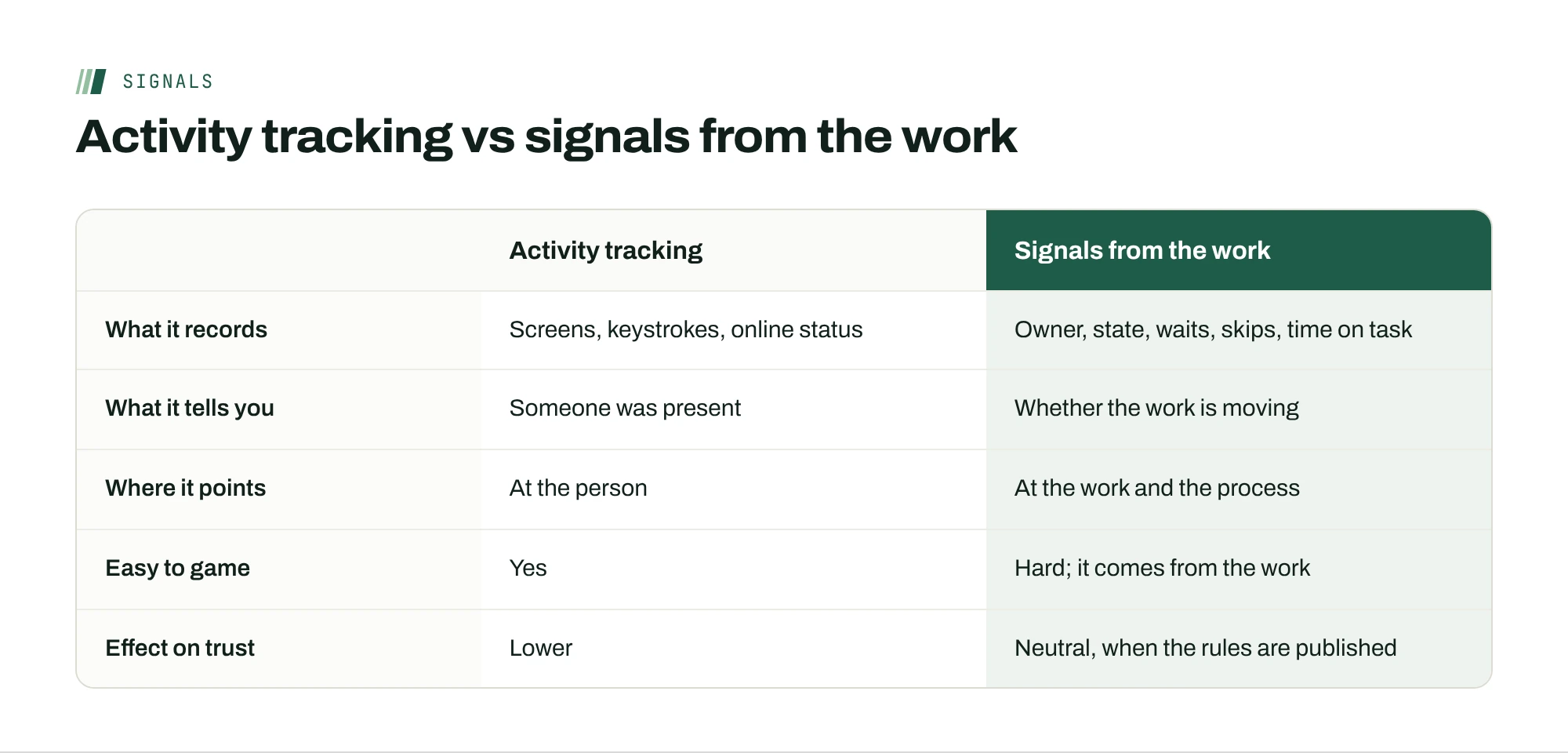
Publish a one-page visibility policy
Fair visibility needs five headings: why you measure, what you track, who can see it, what you never collect, and how the policy changes. Let each person see their own data first. When a signal looks off, start with the work: “The migration card hasn’t moved since Tuesday. What’s getting in the way?” invites a useful answer. “You seem less active this week” invites a defense. Never rank people against each other.
Use logged time to estimate honestly
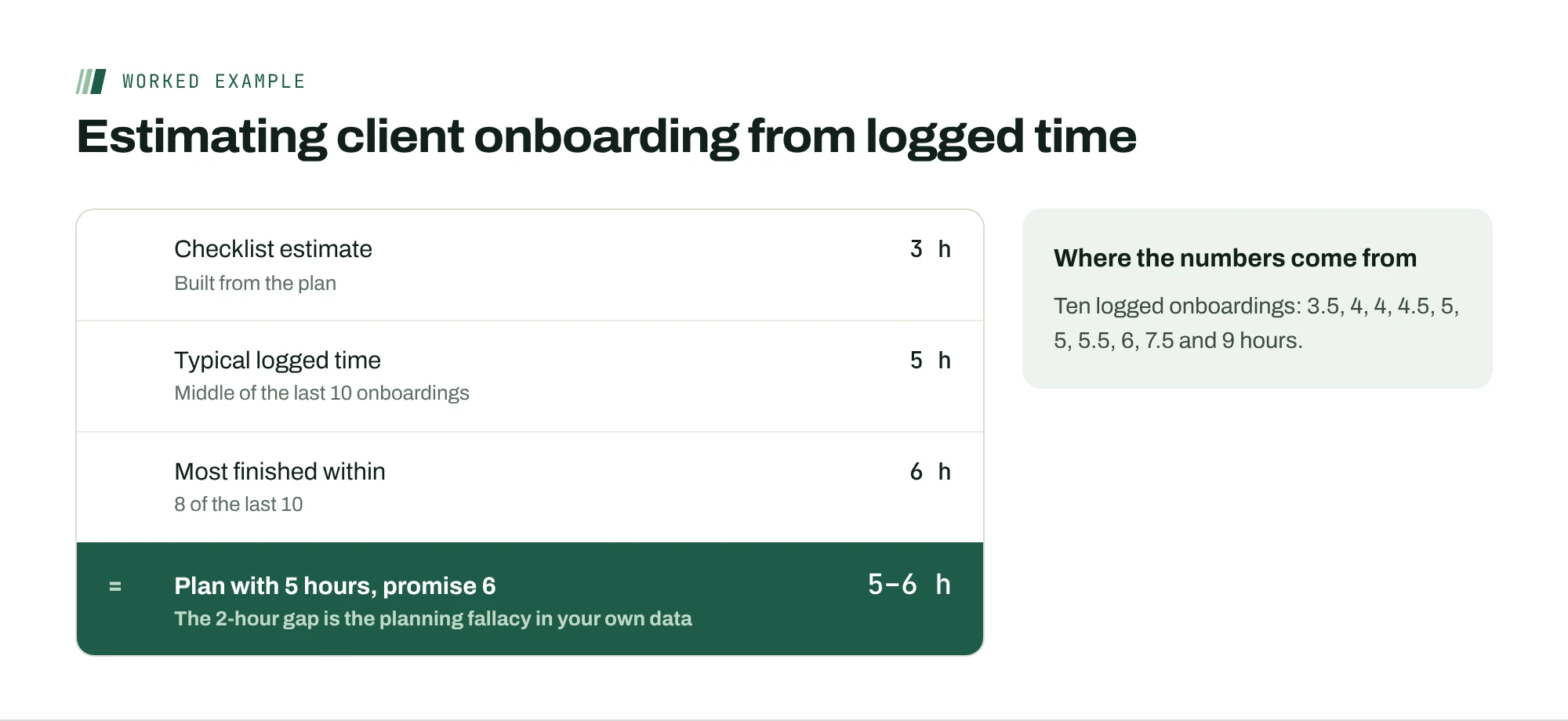
People log time against the task they’re working on, not against the day. Over a few weeks, that gives you something most teams lack: a history of how long similar work actually takes. It matters because plans run optimistic. In a 1994 study by Buehler, Griffin and Ross, only about 30% of students finished their thesis within the time they predicted.
Estimate in ranges from your own history. Plan the week with the typical time, and make promises with the time eight out of ten similar tasks finished within.
Pay contractors for task time
The same logs make contractor pay fairer. Start with hourly pay capped per task, logged to the task. Once a kind of work has been done about ten times and most runs land in a narrow range, offer a fixed price set slightly above the typical hourly cost. Keep hourly pay for work whose scope can’t be known in advance, and introduce any change openly, running old and new side by side for a month.
Go deeper on the blog
Sources
- Monitoring Employees Makes Them More Likely to Break Rules (June 27, 2022)Harvard Business Review
- Exploring the “planning fallacy”: Why people underestimate their task completion times (1994)Buehler, Griffin and Ross, Journal of Personality and Social Psychology
