
Chapter 4 of 7
Hand off work, and get out of the middle
A handoff note that answers the next question, decision limits in writing, and a second owner for everything that matters.

Write for someone who can’t ask you anything
The test for an async handoff is simple: could the person finish the work if you were unreachable for a day? If not, the note is missing something. Structured handoffs pay off well beyond software teams. When the pediatric residency programs of nine hospitals adopted one structured handoff program, I-PASS, medical errors fell 23% and preventable adverse events fell 30%, and the handoffs took no longer.
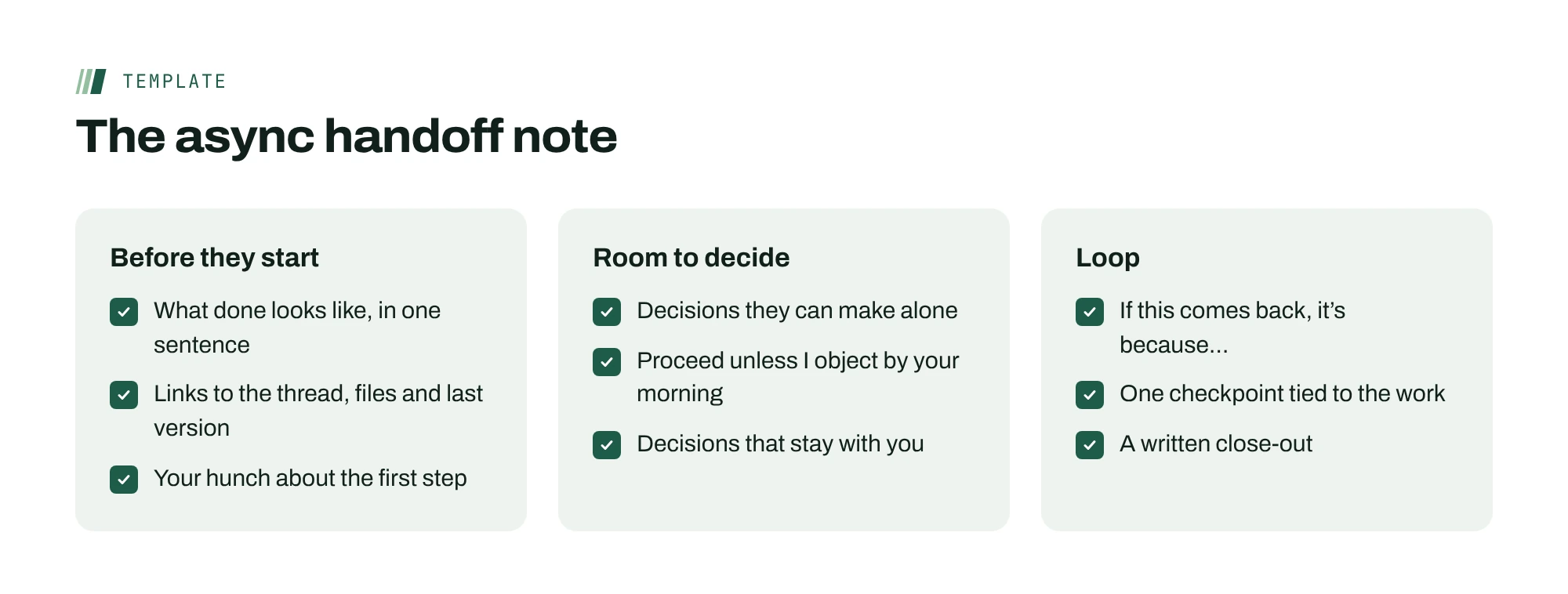
A good async handoff note answers three sets of questions before they’re asked:
- Before they start: what done looks like, in one sentence; links to the thread, files and last version; your hunch about the first step.
- Room to decide: what they can decide alone, what stays with you, and “proceed unless I object by your morning.”
- The loop: the most likely way it goes wrong, one checkpoint tied to the work, and a written close-out.
Write the limits down, not just the permission
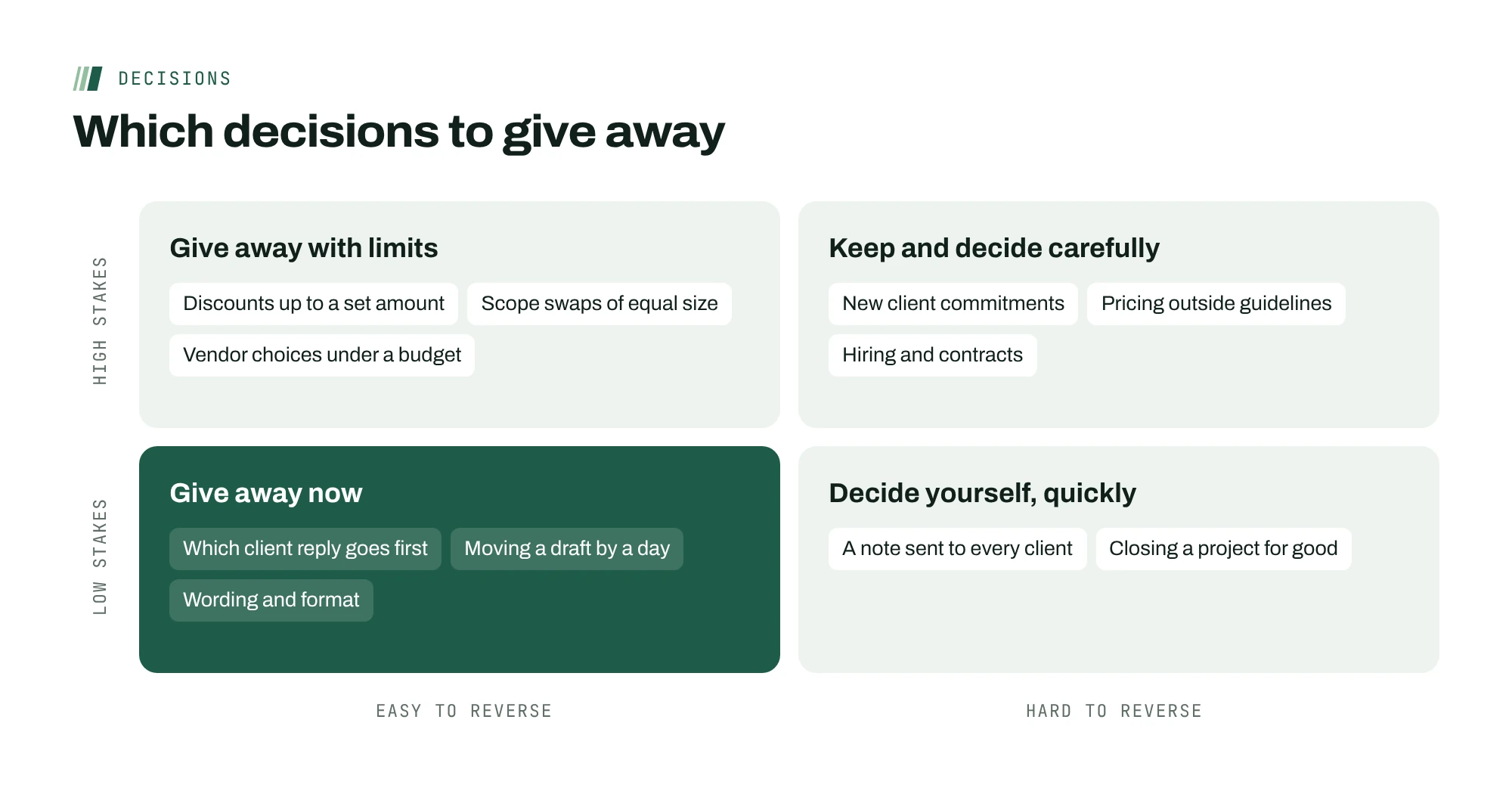
In a Reclaim.ai survey, managers reported spending about five hours a week assigning, prioritizing and re-prioritizing their team’s work. Much of that is questions people could answer themselves if they knew where your limits were. “Use your judgment” isn’t delegation. It’s a guess about what you’ll accept.
Write limits for the four or five decisions that reach you most: a client scope request, spending, task order, a complaint. For each, say when to decide alone and when to check with you. Most of what reaches a remote manager is easy to reverse. Give those decisions away with a default to proceed, and keep the ones that are costly and hard to undo.
Answer at set times, and review the result
Hold two short windows a day for anything that needs you, unless it’s marked urgent. Comment on finished work, not on every step on the way to it. And when someone brings a decision they could make, ask what they’d do if you weren’t around this week. Most people already have a reasonable answer.
Give everything important a second owner
Remote teams hide key-person risk, because the person holding the context is often the fastest replier, and nobody notices until they’re away. When researchers estimated it for 133 popular open-source projects on GitHub, 65% depended on two or fewer people. Run a 30-minute audit: for each important responsibility, ask who could do it tomorrow, where the context lives and when the second person last did it. Then rotate a second owner through the real work, with the notes open, and use time off as a drill.
Go deeper on the blog
Sources
- Safer Patient Handoffs (November 18, 2014), on the I-PASS study in the New England Journal of MedicineHarvard Medical School
- Task Management Trends Report (March 29, 2022)Reclaim.ai (sells scheduling software)
- A Novel Approach for Estimating Truck Factors (ICPC 2016)Avelino, Passos, Hora and Valente
