
Chapter 7 of 7
Your first 30 days
One habit a week, in the order that pays back fastest, and four numbers that tell you it’s working.

Before you start
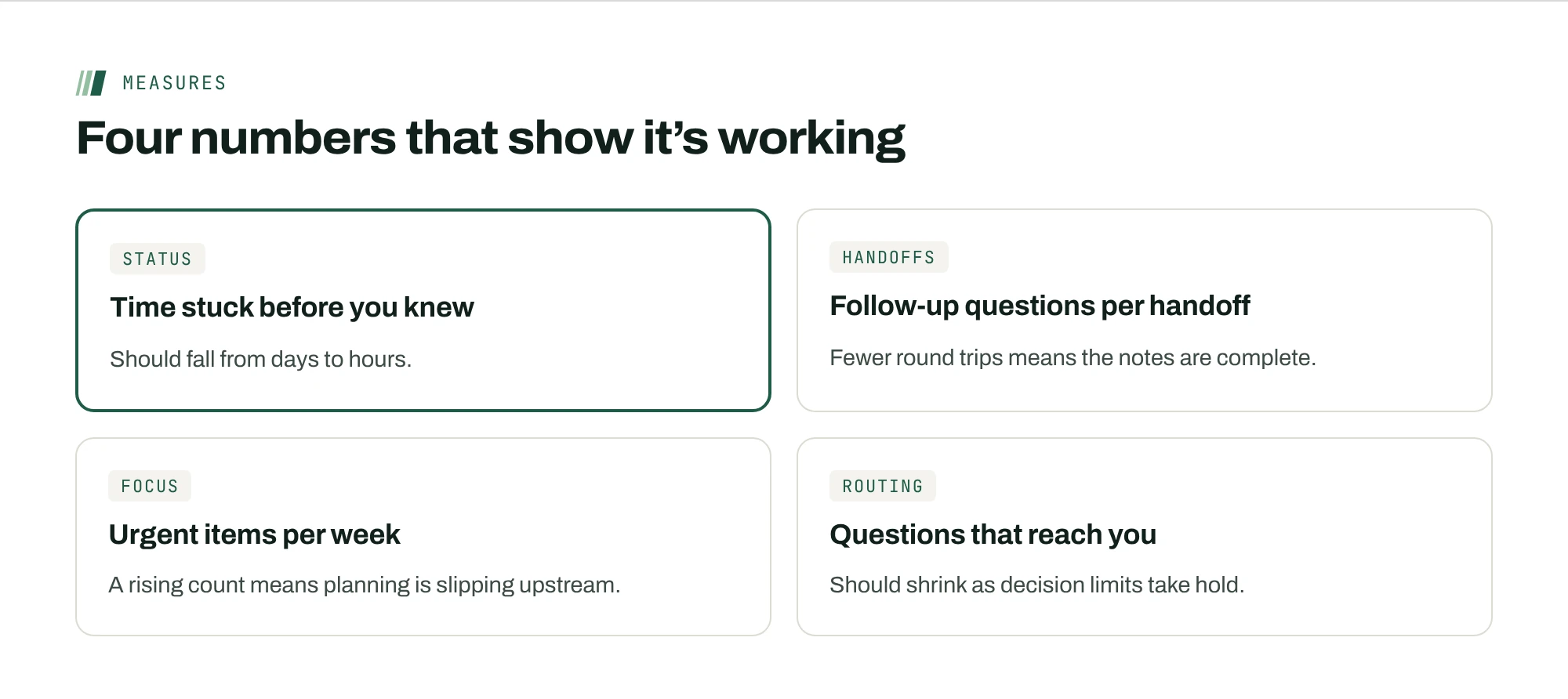
Don’t announce a new operating model. Tell the team you’re going to try one change a week for a month, that each change is an experiment, and that you’ll keep only what works. Pick one shared place where the priority post, the agreements and the templates will live. Then write down where the four numbers at the end of this chapter stand today.
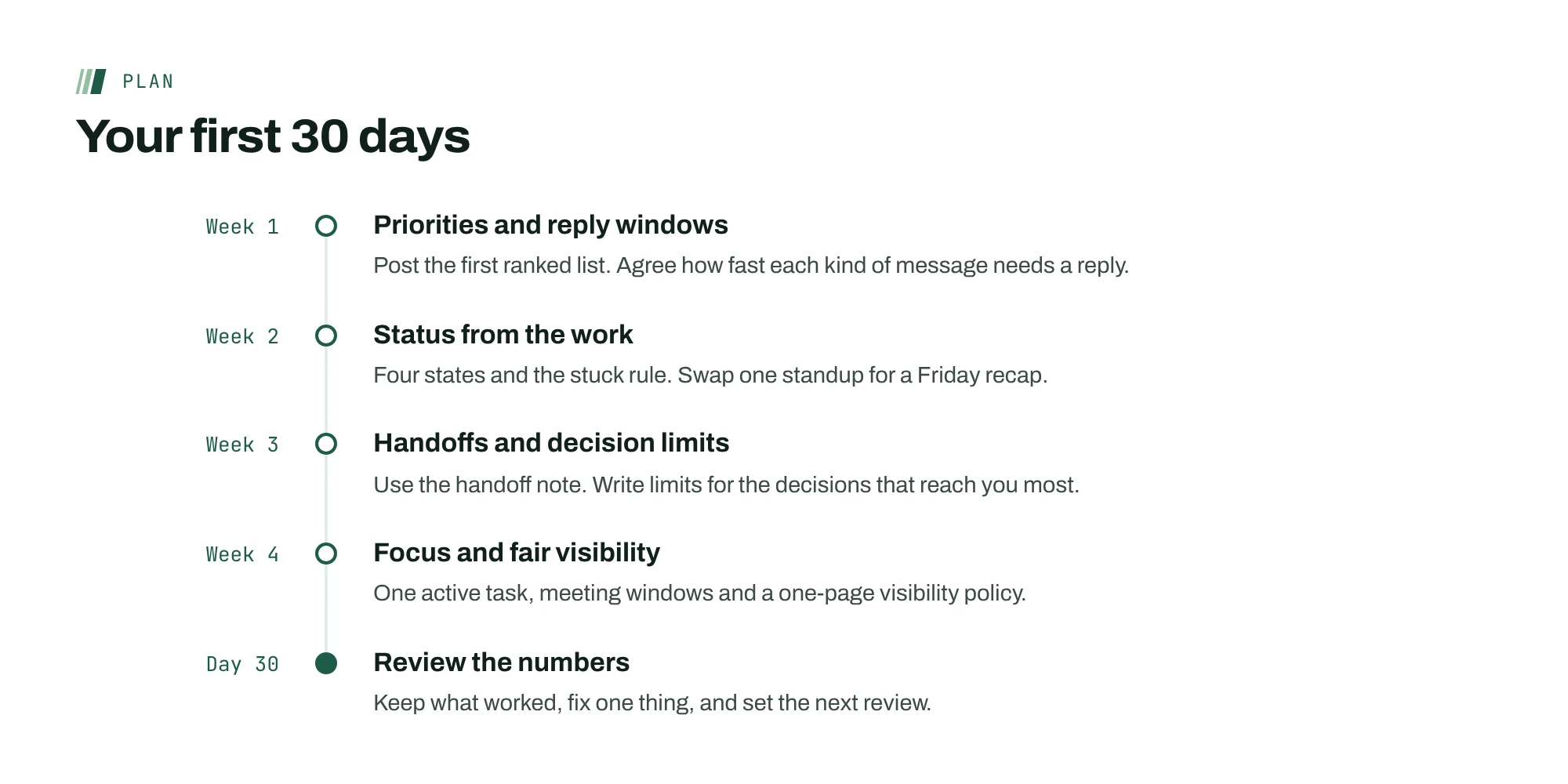
Week 1: priorities and reply windows
Publish the first ranked priority post on Monday, with a “not now” list and the exception rule. Share a draft response-time agreement and let the team edit it in writing until Wednesday. Publish the final version on Thursday.
Week 2: status from the work
Agree on the four states and the stuck triggers. Make sure every active task has one owner. Send the first Friday recap, and cancel one standup the following week. Keep the social part of the call if people want it, as an optional, unhurried conversation that has nothing to do with status.
Week 3: handoffs and decision limits
Ask everyone to use the handoff note for work that crosses a time zone. Write limits for the five decisions that reach you most, and start two short office-hour windows a day. Run the key-person audit and name a second owner for the riskiest responsibility.
Week 4: focus and fair visibility
Introduce one active task and the ready-to-resume note. Agree on meeting windows. Publish the visibility policy, and show each person their own data before anyone else looks at it.
Day 30: review the numbers
Compare the four numbers with where they started. Keep the habits that moved them, fix the one that didn’t, and set the next review for a month out. If a habit slipped, don’t add a rule. Ask what made it hard to keep, and make that easier.
What comes after
After the first month, the habits mostly run themselves, and your job shifts from routing work to improving how it flows. Look for the same problem showing up again and again: the same kind of task stuck, the same handoff bouncing back. Each one is a chance to fix the source, not the symptom.
